EDUCATION

Preparing haumāna to carry kuleana forward

Education is where kuleana takes root. Grounded in 'ike kūpuna and the enduring vision of Ke Ali'i Pauahi, learning across Ke Kula 'o Kamehameha strengthens the knowledge, identity and sense of purpose haumāna need to understand who they are and the role they can play in our lāhui. Through 'ōlelo Hawai'i, culture, history and meaningful experiences beyond the classroom, haumāna are empowered to embrace their kuleana and carry what they learn forward.

Kamehameha Schools fifth grade play

Behind Kamehameha Schools fifth grade play: Teaching history, truth and Pauahi's legacy

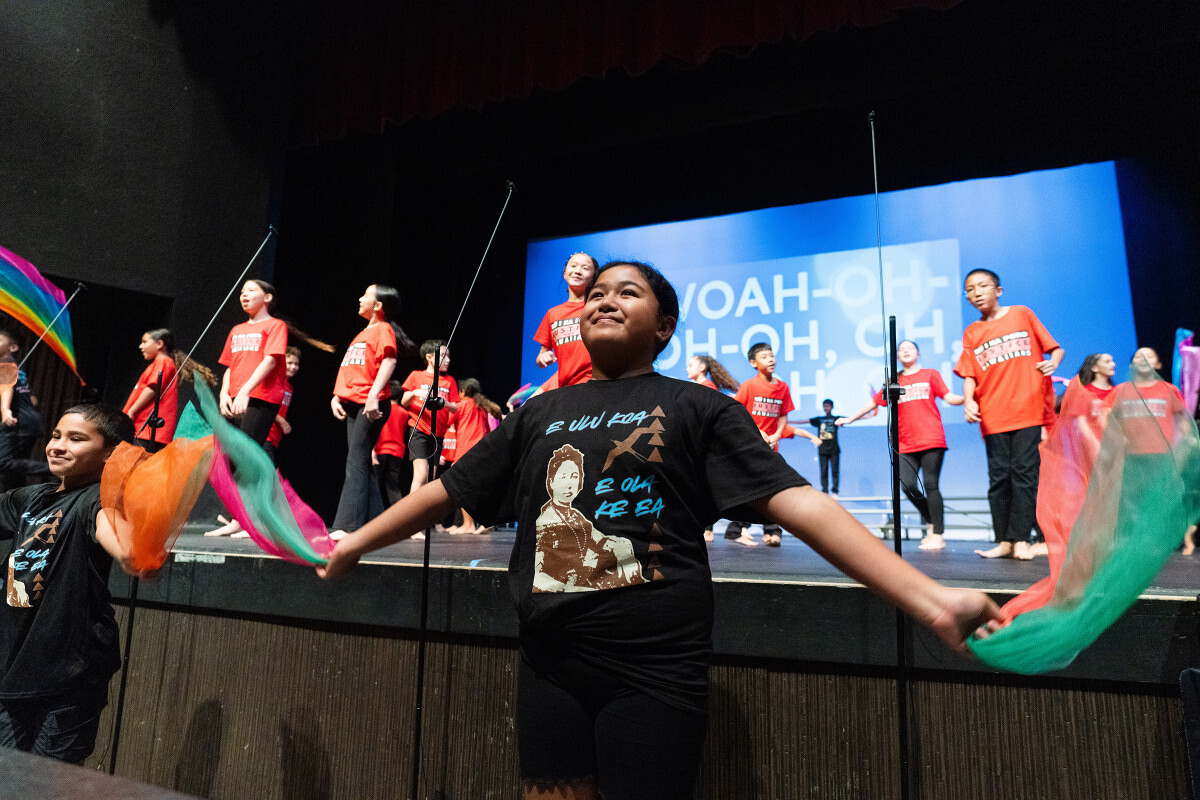
Kamehameha Schools Kapālama's fifth-grade play is a signature experience for elementary students, one that alumni still reference years later in graduation speeches and conversations about their time at KS. But this year's production carried even deeper significance as haumāna took the stage to tell the story of their kula, its founder Ke Ali'i Bernice Pauahi

“We were going to do a totally different topic,” the grade’s learning and innovation coach Kristy Keʻala Sharrer KSK’95 said. “But we decided to change gears because we knew we needed to do something in support of Pauahi and our school.”

Researching and learning history is one thing. Interpreting generations of texts into a production meaningful enough for 10- and 11-year-olds to understand, embody and deliver is another. Working closely with departments across the enterprise, the Kapālama kumu spent months refining the script to ensure it was not only historically accurate but also thoughtful and pono in its approach.

“We knew if we were going to do this story, it was going to come with a lot more kuleana,” Kumu Mara Bacon-Chang KSK’87 said. “We had so many changes, but everyone’s attitude about it was terrific because — anything to protect the will. Anything to protect her kauoha.”

The production itself is a full-grade effort involving all 144 fifth graders, from acting and singing to backstage support and choreography. Along the way, kumu said students often discovered strengths and confidence they did not know they had.

“We constantly tell them they are representing our aliʻi and our kūpuna, so not to be ashamed on stage when sharing this moʻolelo,” Sharrer said.
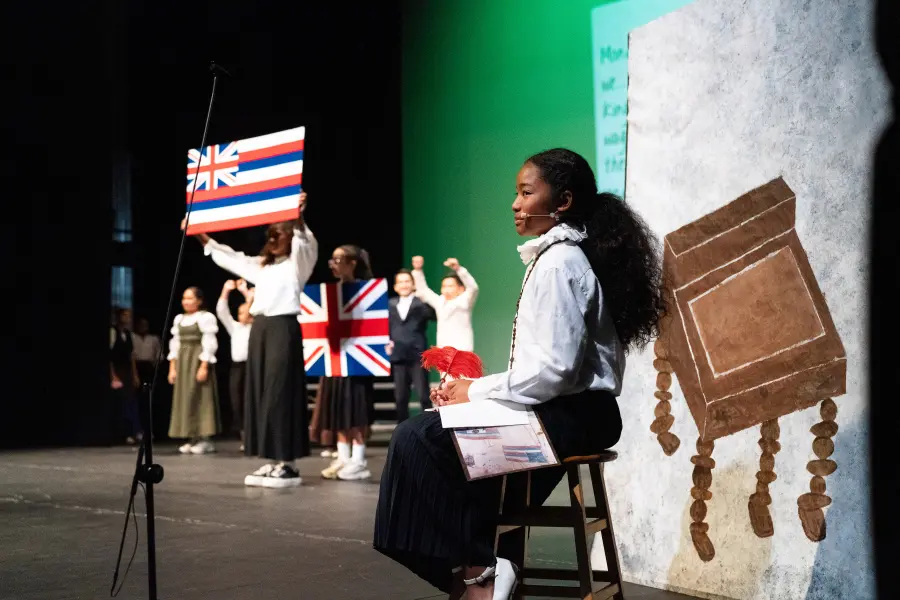
Kamehameha Schools fifth grade play

While kumu and haumāna alike uncovered new knowledge through their research on Pauahi and the school’s history, the foundation for that understanding begins long before fifth grade. Through Hawaiian culture-based education, students are grounded in ʻāina, identity and the history of their people so that the Hawaiian Kingdom does not feel distant from their lives today.

“When kumu at the lower levels instill Hawaiian thinking, doing and being, it makes our job so much easier when we put them on stage,” Bacon-Chang said. “In all the work that we do, the field trips we go on, the guests we have, there is the constant expectation for them to see things through a kanaka lens.”

That grounding also means confronting difficult parts of history honestly, including moments within the school’s own past. The kumu said the process challenged both educators and students to think critically about how stories are told, whose perspectives are centered and the duty to share them.

“We used multiple sources to give multiple perspectives of this time period,” Sharrer said. “I don’t want to have only biased resources. We don’t want to hide the truth of history. That’s how we learn.”

That is why the emotional connection audiences feel to these productions runs so deep. Families are watching their children carry forward the stories, values and legacy of our lāhui.

“The plays [before] didn’t hit like the way the plays hit now,” Bacon-Chang said. “It hits home. It means so much more. Everyone knows to bring a Kleenex box to the play.”

As the curtain closed on another production run and school year, haumāna walked away with a stronger understanding of Pauahi, their school and themselves as Pua a Pauahi — a feeling the kumu hope will continue guiding them long after the final bows and into whatever stories they tell next.

View more photos from the performance: https://www.ksbe.edu/news/photos/on-stage-at-kapalama-e-ulu-koa-e-ola-ke-ea
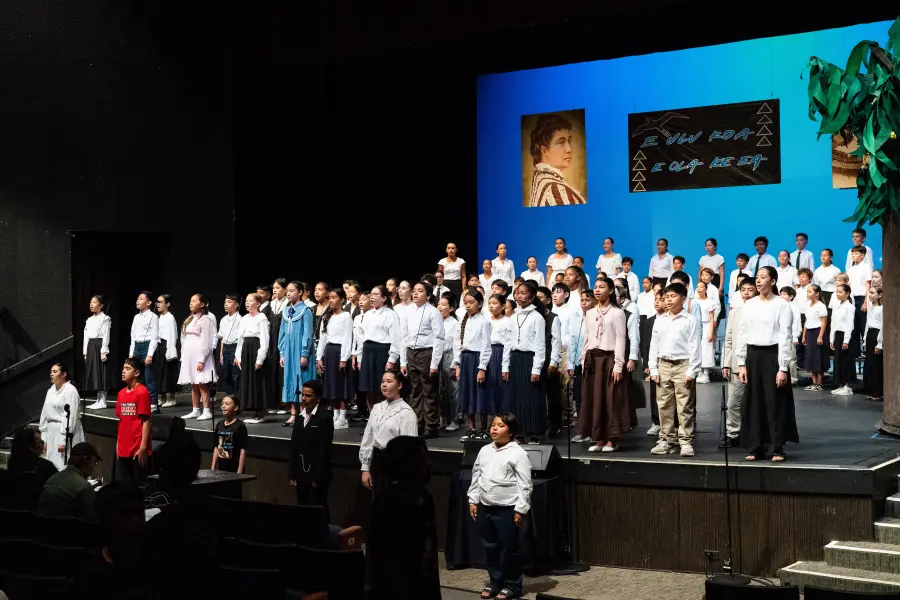
Kamehameha Schools fifth grade play
Kamehameha Schools students in a radio studio

Kamehameha Schools students advance 'ōlelo Hawai'i on the airwaves

Hāwelelani Camara's hands were shaking as she leaned toward the microphone. Speaking 'ōlelo Hawai'i in class at Kamehameha Schools Hawai'i was one thing. Sharing a mo'olelo on the radio — knowing anyone in the community could be listening — was another.

“It was kind of scary going in. I was feeling so nervous,” Camara said. “But having kumu and my mom there helped me get into the groove and feel more comfortable.”

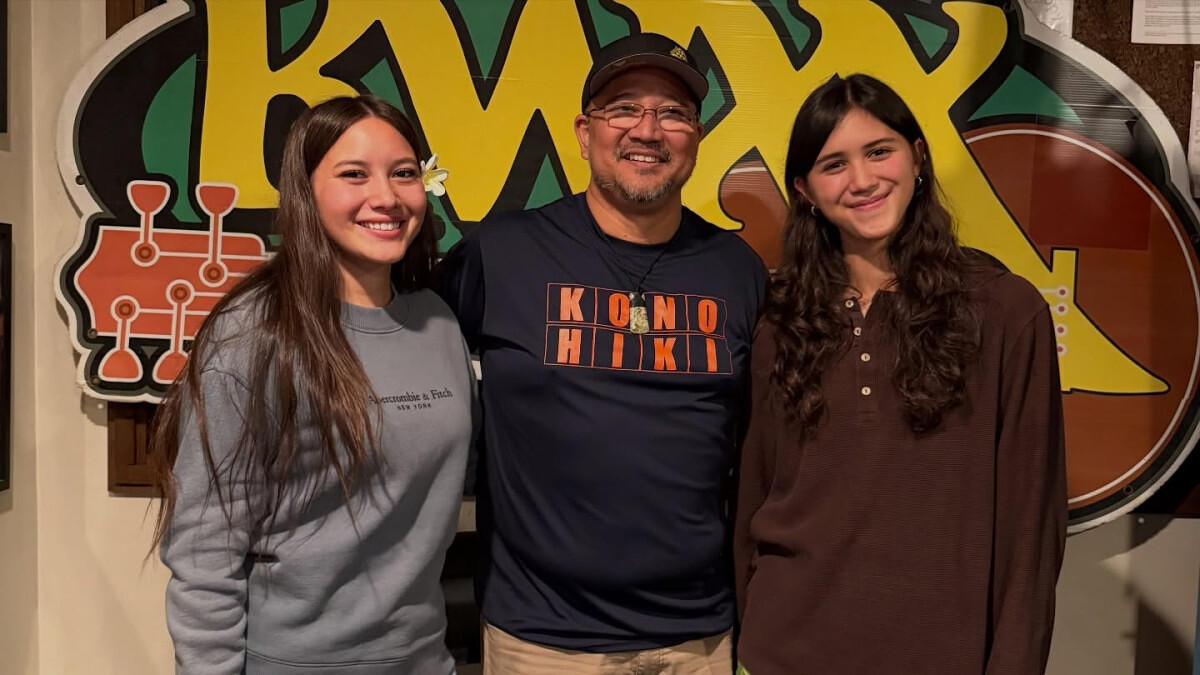
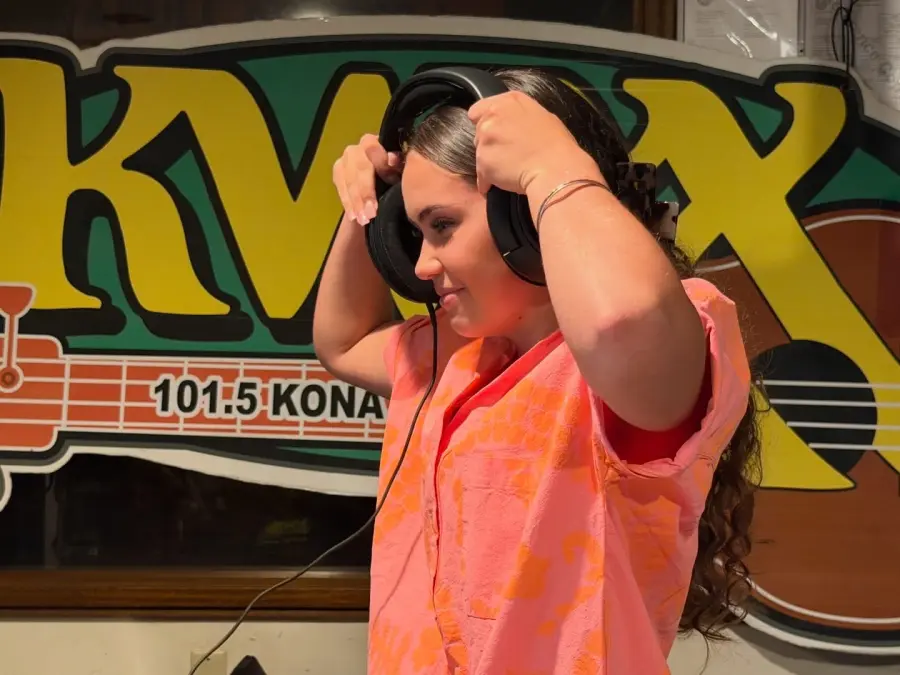
Camara is one of several Keaʻau campus haumāna who lent their leo to “Alana I Kai Hikina,” a long-running KWXX radio program that brings ʻōlelo Hawaiʻi and moʻolelo to listeners across the pae ʻāina. For advanced ʻōlelo Hawaiʻi learners, the opportunity opened a door that few classrooms can offer: stepping into the wider Hawaiian-speaking community and taking part in organic back-and-forth conversations.

“Providing an authentic experience for them to engage with other Hawaiian speakers outside of the classroom is super important to their growth,” said Maikalani Glendon-Baclig, the kumu ʻōlelo Hawaiʻi coordinating the collaboration.

For the program, haumāna selected traditional Hawaiian stories and adapted them into shorter versions for broadcast. Camara’s team shared No Ke Aliʻi Haʻanui o Puna, a moʻolelo about a Puna chief known for constantly boasting, while Kilolanipōwehiwehiamoana Smith and her partner chose a moʻolelo about ʻĪwahaʻouʻou, a Kona farmer who could transform into a shark.

The broadcast required quick thinking as well as preparation. “Alana i Kai Hikina” hosts Kawehi Hayes and Kaimana Barcarse, who also serves as KS sites and facilities director, asked spontaneous questions, pushing participants to respond in ʻōlelo Hawaiʻi on the spot.

“That helped us learn how to have conversations instead of just going script to script,” Smith said. “We could just talk with each other in Hawaiian.”

Kilolani Smith prepares to record a moʻolelo in ʻōlelo Hawaiʻi at KWXX in Hilo.

Kilolani Smith prepares to record a moʻolelo in ʻōlelo Hawaiʻi at KWXX in Hilo.

The radio program traces its roots to the early 1990s, when it was created through a seminar class at the University of Hawaiʻi at Hilo. From college students to longtime practitioners, the show continues as a space to share mele, stories, ideas and insights with the lāhui.

For many learners at non-immersion schools, opportunities to hear and speak ʻōlelo Hawaiʻi regularly can be limited. As a former kaiapuni student, Smith was accustomed to using the language throughout the entire school day. Recording the program allowed her a chance to return to that kind of conversation.

“English is not a dying language,” Smith said. “As Hawaiians, it should be our kuleana to keep our [own] language alive.”

That understanding is why Glendon-Baclig requires her classes not only to participate in the program but also to listen to the broadcast each week and keep using ʻōlelo Hawaiʻi beyond school. But keeping that momentum can be challenging as haumāna balance academics, athletics and family life. Still, she believes experiences like the radio program help them see ʻōlelo Hawaiʻi as part of who they are.

For Glendon-Baclig, that realization came through her own journey. Back when she was an ʻōpio, she had to seek out the language herself, long after earlier generations in her ‘ohana had lost it.

“Language isn’t just a class requirement,” she said. “It’s a kuleana to our lāhui. Our language is precious, and it’s a privilege to speak it.”

Through partnerships like this, she hopes haumāna begin to see ʻōlelo Hawaiʻi not simply as something learned in school but something they can carry forward for their ‘ohana, their communities and the future of the language itself.

Kamehameha Maui students at WIPCE in Aotearoa

Kamehameha Maui students bring self-published Hawaiian children's book to life at WIPCE

Article contributed by a student author as part of a series highlighting haumana experiences at the 2025 World Indigenous Peoples Conference on Education.

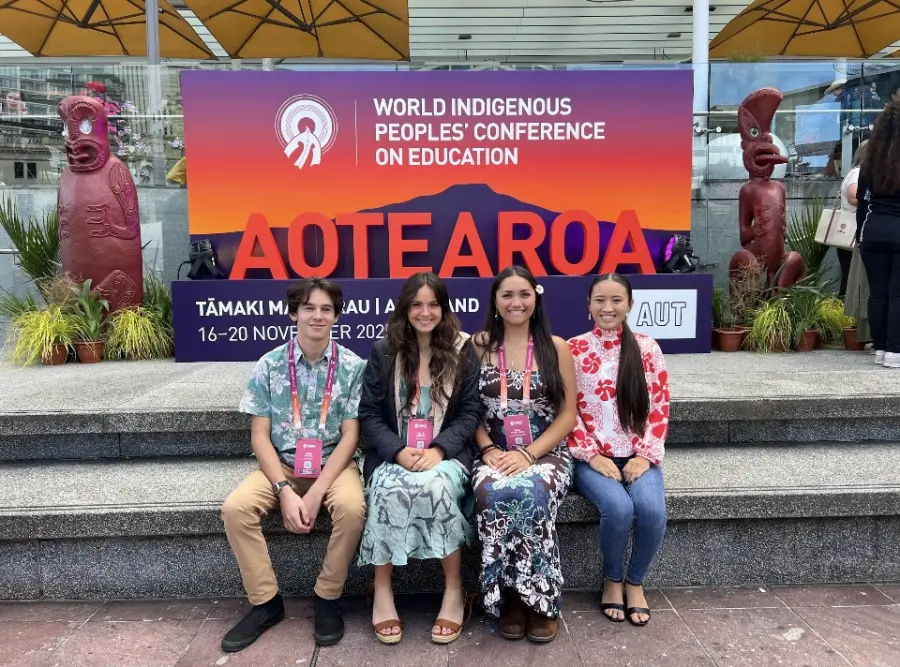
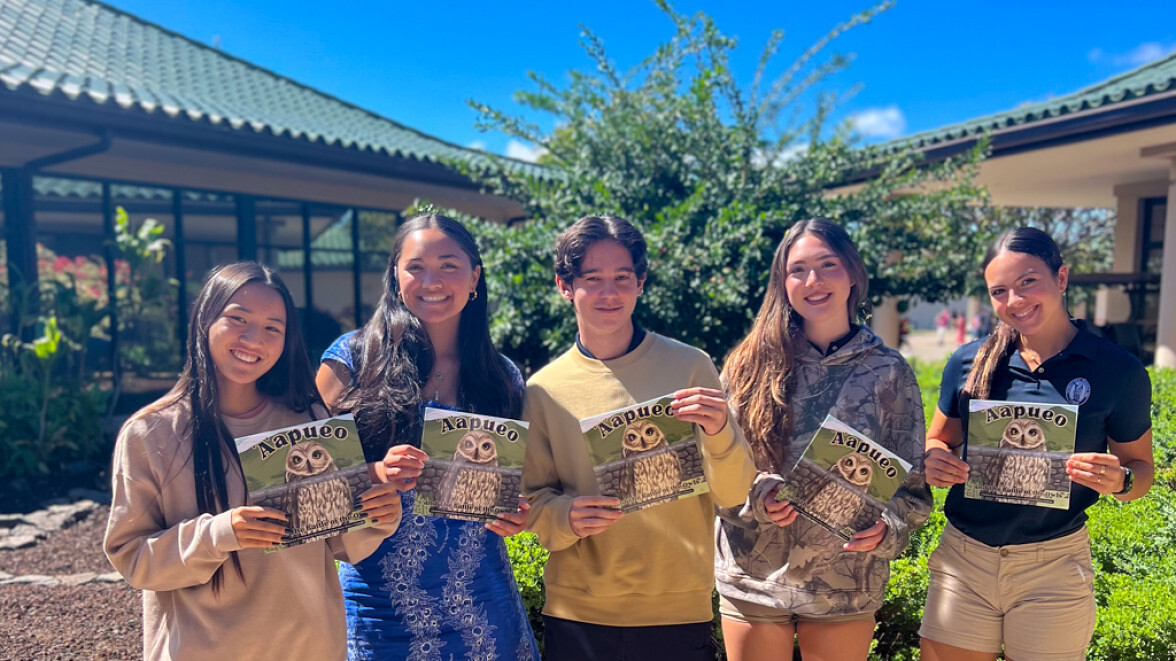
Four haumāna from Kamehameha Schools Maui recently traveled more than 4,600 miles to Aotearoa, New Zealand, to share the mo'olelo of A'apueo and the Battle of the Owls on a global stage. The students — Teija Wada KSM'26, Sara Stupplebeen KSM'26, Vann Siphers KSM'26, and Allie Kennedy KSM'26 — presented their self-published Hawaiian children's book at the World Indigenous Peoples Conference on Education

The group is part of Hui Aloha ʻĀina o ʻAʻapueo, an out-of-school program led by advisors Kumu Kēhau Lucas and Kumu Hulali Silva. Together, the haumāna spent a year researching, writing, illustrating and producing a keiki-friendly book that honors an ancient moʻolelo tied to the ʻāina surrounding their campus.

Their purpose in attending the conference was twofold: to share student-created Hawaiian storytelling with a global Indigenous audience, and to uplift student voice in the revitalization of culture through moʻolelo.

While WIPCE is primarily attended by educators, leaders and researchers, the KS Maui haumāna quickly realized their place and kuleana within the space.

“We noticed right away that most of the attendees were adults,” said Wada, “but as we listened, we realized that we are the next generation carrying this work forward. Being there reminded us that this kuleana is being passed down to us.”

The four-day conference brought together Indigenous communities from around the world to share stories of resilience, cultural revitalization and education pathways rooted in ancestral knowledge. Throughout the week, KS Maui students attended sessions that inspired them and helped settle their nerves before their own presentation on Thursday morning.

Their session took place in a large cinema theater, which filled quickly before the presentation began. The haumāna opened with the mele “Ke Ahupuaʻa ʻo ʻAʻapueo,” introduced themselves, and shared the meaning behind their work — their pilina as a hui, their creative process and their responsibility to represent their lāhui with pride.

“All of us felt honored to be surrounded by so many highly regarded leaders who share the same goal of uplifting their people,” said Kennedy. “Being at WIPCE reminded me that we belong in this space and that storytelling is one of the strongest ways we can contribute to our culture.”

Kennedy also spoke during the presentation about the common feeling among youth of “not being Hawaiian enough,” a sentiment the group openly discussed as they worked on their project. Presenting at WIPCE, she said, helped them challenge and overcome that belief.

“We realized that our identity isn’t measured by how we look or what activities we do. We carry our culture in different ways, and for us, it’s through education and storytelling.”

Their message resonated deeply with the audience. A chemistry educator from the Kamehameha Schools Hawaiʻi campus, who integrates Hawaiian practices into their lab instruction, approached the students afterward.

“Mahalo for sharing this moʻolelo,” they told them. “You showed how 21st-century skills — communication, creativity and collaboration — can uplift cultural knowledge and carry it into the future.”

As the students reflected on the conference, they expressed gratitude for the guidance of their kumu and the opportunity to represent their school, their ʻohana, Ke Aliʻi Pauahi, and their lāhui on an international stage.

“This experience helped us grow not only as storytellers, but as young Hawaiians,” said Stupplebeen. “It showed us that our voices matter.”

Students at the World Indigenous Peoples Conference on Education
East Hawai'i preschool keiki learning outdoors

East Hawai'i preschools build connection with 'āina

He iki hala au no Keaʻau, ʻaʻohe pōhaku ʻalā e nahā ai. I am a small hala fruit of Kea‘au, but there is no rock hard enough to smash me. Speaks to resilience: though small, one possesses great inner strength.

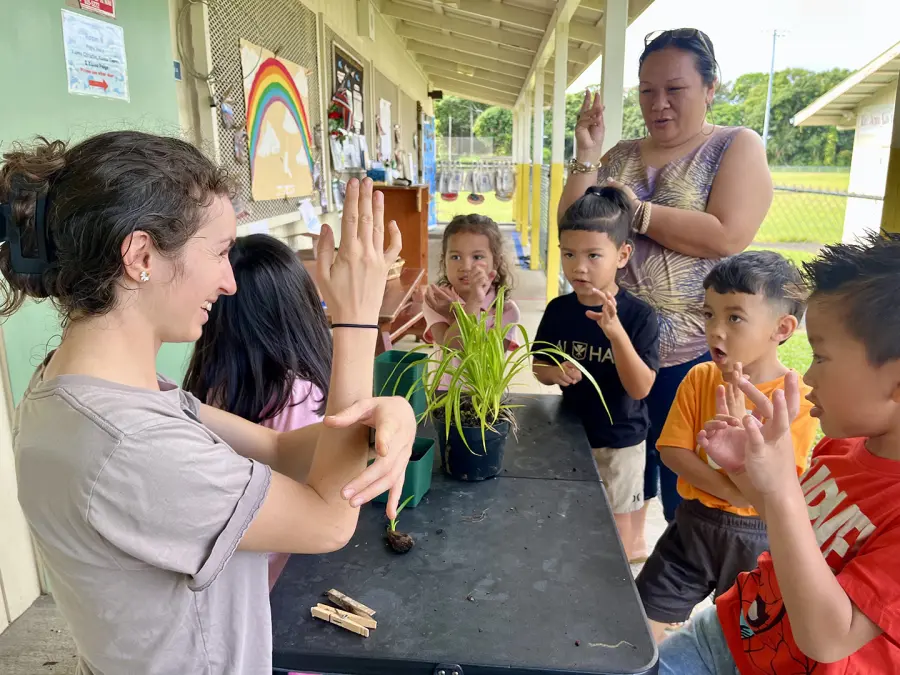
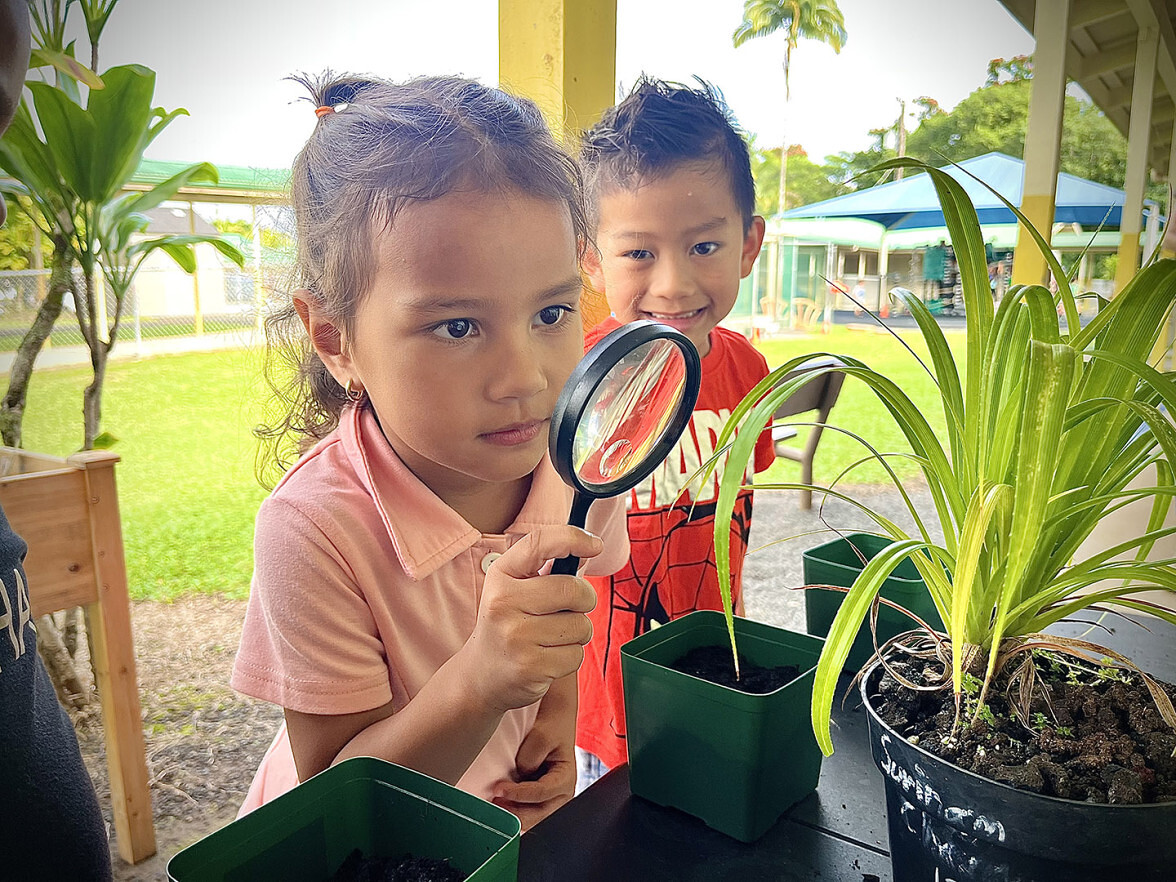
Keiki at three KS Preschools campuses in East Hawai'i recently engaged in hands-on learning centered on hala, the pandanus tree. In partnership with Liko Nā Pilina, KS Preschools' 'Ohana Engagement Hui guided hala-themed learning activities at Keaukaha, Kea'au and Pāhoa preschools. They wove together lessons on science, culture and stewardship.

Hala is a canoe plant deeply rooted in Hawaiʻi Island’s history and identity. It has a special connection to the east side of Hawaiʻi Island, especially in Puna, an area famed for its abundance of the tree. This legacy is captured in numerous ʻōlelo noʻeau such as Ka makani hali ʻala o Puna. The fragrance-bearing wind of Puna. Puna, Hawai‘i was famed for the fragrance of maile, lehua and hala. It was said that when the wind blew from the land, fishermen could smell the fragrance of these leaves and flowers.

Moʻolelo further explain hala’s presence, telling of Pele’s canoe becoming entangled in Puna’s hala. In her anger, she scattered the trees across the island, accounting for their wide distribution today.

Keaukaha Preschool kumu and haumāna learning a mele about the life cycle of hala

Keaukaha Preschool Kumu Christie Zimmer and her haumāna learn a mele with hand motions about the life cycles of hala, with Emma Stierhoff of Liko Nā Pilina. Stierhoff reflected: “I think it’s really important that keiki develop relationships with trees all around them. If they leave knowing the name of one plant, I’m happy—because then when they go to the beach they can say, ‘Oh, there is kumu hala that we planted in our class.’ And once they have that relationship, then they care about that tree. It’s more than just some inanimate object they see—it’s a living being that they have a relationship with, and they grow to care more for those other beings.”

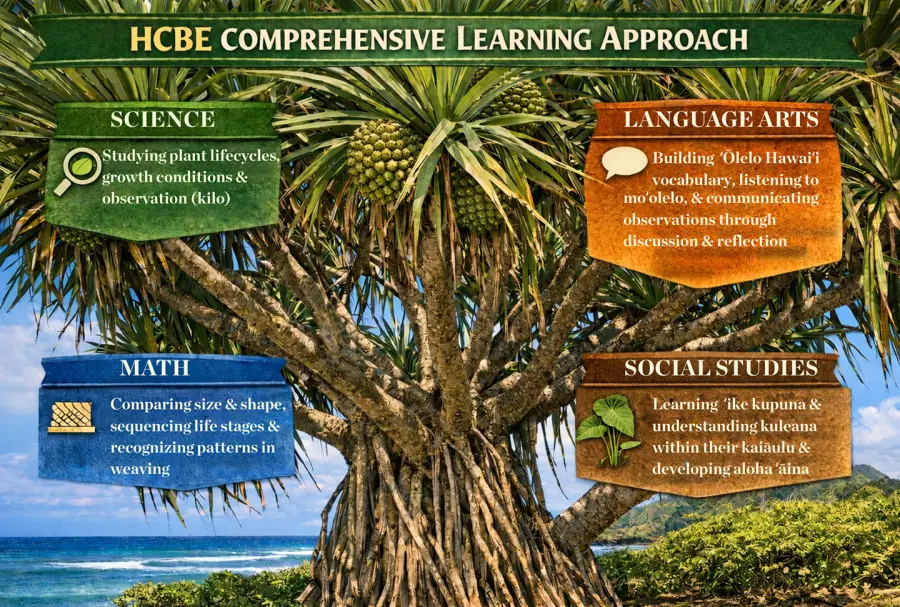
The experience reinforced the rigor of Hawaiian culture-based education as a comprehensive learning approach. Through hala, keiki engaged in science, studying plant lifecycles, growth conditions and observation (kilo). They developed language arts skills by building ʻōlelo Hawaiʻi vocabulary, listening to moʻolelo and communicating observations through discussion and reflection. Mathematics was embedded through comparing size and shape, sequencing life stages and recognizing patterns in weaving. Social studies emerged through ʻike kupuna and understanding kuleana within their kaiāulu.

HCBE learning is hands-on, interdisciplinary, place-based, and developmentally rigorous — grounded in ʻike Hawaiʻi while meeting high academic expectations.

Keiki learning about hala at a KS Preschool in East Hawaiʻi

“Keiki will mālama the plants at school, and kilo their growth,” Keaukaha Preschool kumu Christie Zimmer said. “ʻOhana will be able to continue to care for the hala at home or donate them to local reforestation efforts.”

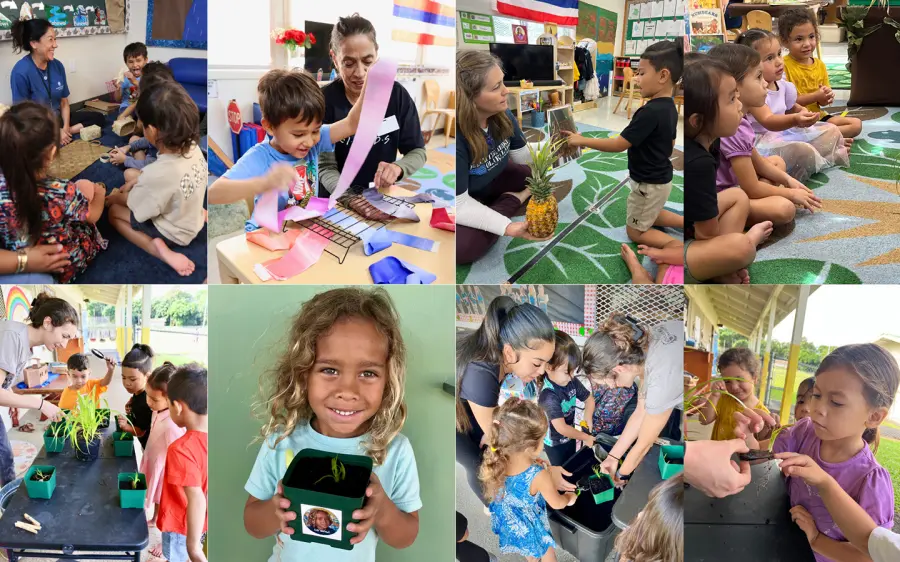
Together, the East Hawaiʻi haumāna planted more than 100 hala seedlings, transforming learning into a living legacy — guided by culture and activating future aloha ʻāina.

Keiki painting and weaving with hala at a KS Preschool

Through planting hala at school, painting with hala keys, and practicing weaving skills, keiki deepened their connection to the versatile hala. Keiki also learned about the lifecycle of the plant, the many uses of lauhala and increased their ʻōlelo Hawaiʻi vocabulary.

E HOLOMUA PŪ KĀKOU!

LET US MOVE FORWARD TOGETHER!


Visit pauahi.org to learn how your donations can help uplift our lāhui

pauahi.org

See our future vision take shape with Strategic Plan 2030

KSSP 2030

Learn more about our kuleana at Kamehameha Schools.

ksbe.edu

DOWNLOADS: