ʻĀina Stewardship

Caring for what has been entrusted to us

'Aina Pauahi is both an enduring gift and a profound kuleana. Through thoughtful, culturally grounded stewardship, Kamehameha Schools cares for these lands in ways that honor Pauahi's legacy while strengthening their health, resilience and abundance for generations to come. From restoring native landscapes and building wildfire resilience to supporting agriculture and mālama 'aina, this work reflects a responsibility to care for what sustains our lāhui today and safeguard it for tomorrow.

Stewarding 'aina Pauahi

Stewarding 'aina Pauahi: Growing Pauahi's land legacy forward

imua

This mo‘olelo first appeared in I Mua magazine. Read the full issue.


“For the purposes aforesaid I grant unto my said trustees full power to lease or sell any portion of my real estate, and to reinvest the proceeds and the balance of my estate in real estate, or in such other manner as to my said trustees may seem best.”


Ke Ali‘i Bernice Pauahi Bishop stewarded a vast ‘āina portfolio grounded in her chiefly lineage. She had the incredible foresight to ensure those lands would benefit Native Hawaiian keiki and the lāhui for generations to come. She wrote in paragraph 13 of her will: “For the purposes aforesaid I grant unto my said trustees full power to lease or sell any portion of my real estate, and to reinvest the proceeds and the balance of my estate in real estate, or in such other manner as to my said trustees may seem best.”


Our present-day existence as Ke Kula ‘o Kamehameha is built upon this kahua of taking decisive action. That’s because 100% of the financial resources needed to fulfill Ke Ali‘i Pauahi’s wishes come from the success and growth of the endowment. ‘Āina is not simply part of that story, it is foundational to it.


Our Board of Trustees and CEO have called for ‘āina stewardship grounded in E Ola! This multi-generational perspective is rooted in our past while innovating forward. It is central to how we approach ‘āina today. Rather than managing a static inheritance, we are stewards of a living ‘āina legacy, one that must evolve and regenerate to create waiwai (value) in all its manifestations – education, finances, culture, food, water and all elements necessary for thriving keiki, ‘ohana and kaiāulu.


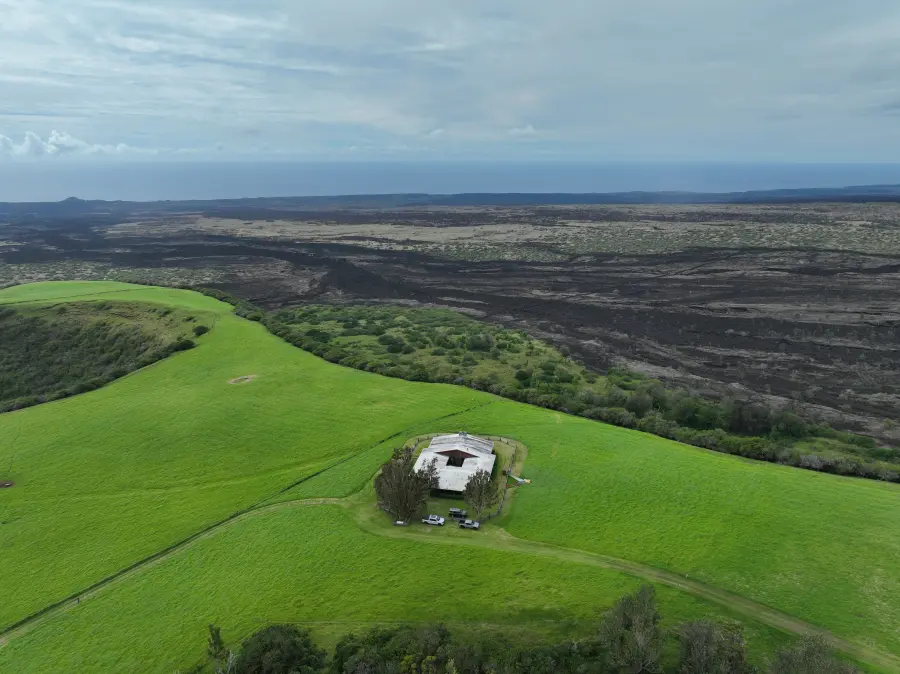
In recent years, there have been several land transactions within the 373,000-acre ‘āina Pauahi portfolio. Kā‘eo Duarte, the vice president of the ‘Āina Pauahi Group, understands the sensitivities that surround any decision regarding ‘āina, and says these sales — and acquisitions — are taken very seriously and are undertaken with rigor, intention and an unwavering commitment to our mission and kuleana as cultural stewards.


“There are certain ‘āina where, through investment, we’ve been able to realize tremendous financial value creation over time. And there are times when it’s appropriate to realize the value and reinvest it. These decisions are difficult and tug at our na‘au. But there is also a tremendous upside knowing that these sales enable us to invest in other ‘āina, other communities, and create waiwai in other ways for future generations,” Duarte said.
Native reforestation begins

Native reforestation begins to take root on KS 'āina in Lahaina ma uka

Hahai no ka ua i ka ulula'au. The rain follows the forest.

As reflected in this well-known 'ōlelo no'eau, our ancestors inherently knew what hydrologists study today; the cyclical, inextricable relationship between forests and rainfall. Rain nurtures the forest. A thriving forest attracts more rain clouds.


Conversely, a diminished forest means fewer rain clouds. That is the current state of affairs in Lahaina and much of West Maui. In just a couple of centuries, this area once known as a verdant food basket for all of Maui, has become hot and parched.


Lahaina lineal descendant Kaulana Kapu has seen the decline up close.


“When I was a kid, I used to run through sugar cane. As I got older, I started to see more of the guinea grass and the buffelgrass, and it’s now a dry landscape.”


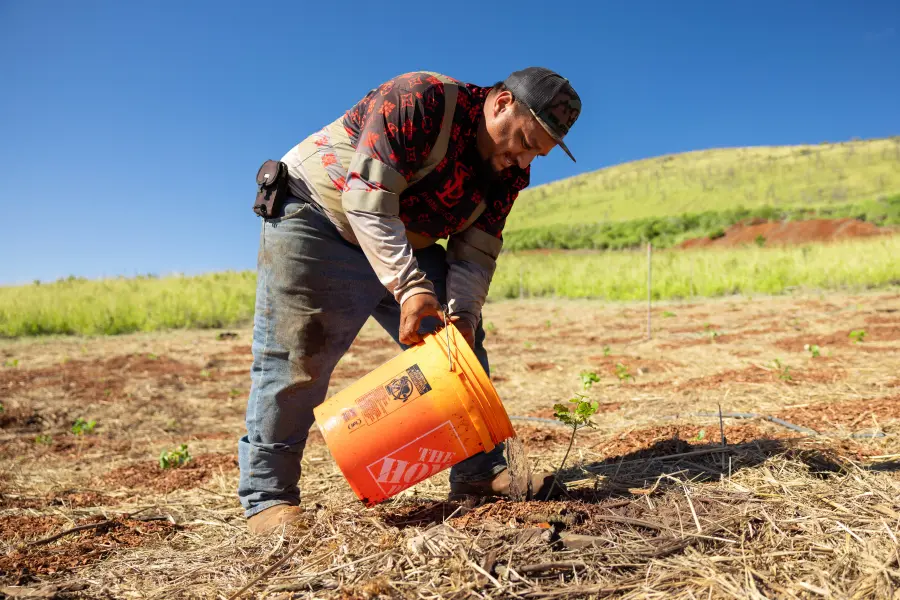
Kaulana Kapu waters a seedling at Puʻuwai

Kaulana Kapu with Kuʻia Agricultural Education Center waters a keiki at Puʻuwai.


Kapu, who works with ʻĀina Pauahi Group partner Ku‘ia Agricultural Education Center, is part of a network that has begun a cutting-edge reforestation effort to bring nahele — and ua — back to the ma uka sections of Lahaina.


Puʻuwai


One focal point of restoration is a ma uka section of KS’ Kuʻia lands dubbed Puʻuwai. In an area adjacent to the slopeside “L” above Lahainaluna, the ‘Āina Pauahi Group has overseen the installation of a protective fence that keeps deer, goats, cows and pigs out of a 200-acre area. Free from the threat of voracious grazers, a coalition of KS ‘āina stewards and community members have begun the arduous work of bringing native lāʻau back on a large scale.


“We’re using a strategy where we plant heavy densities of drought-tolerant plants so they can come in and provide some cover and make the climate a little bit gentler. They are tough and can handle the harsh conditions and once established, we can interplant other species over time and diversify the forest,” said Mililani Browning KSK’02, a natural resources manager with KS’ ʻĀina Pauahi Group.


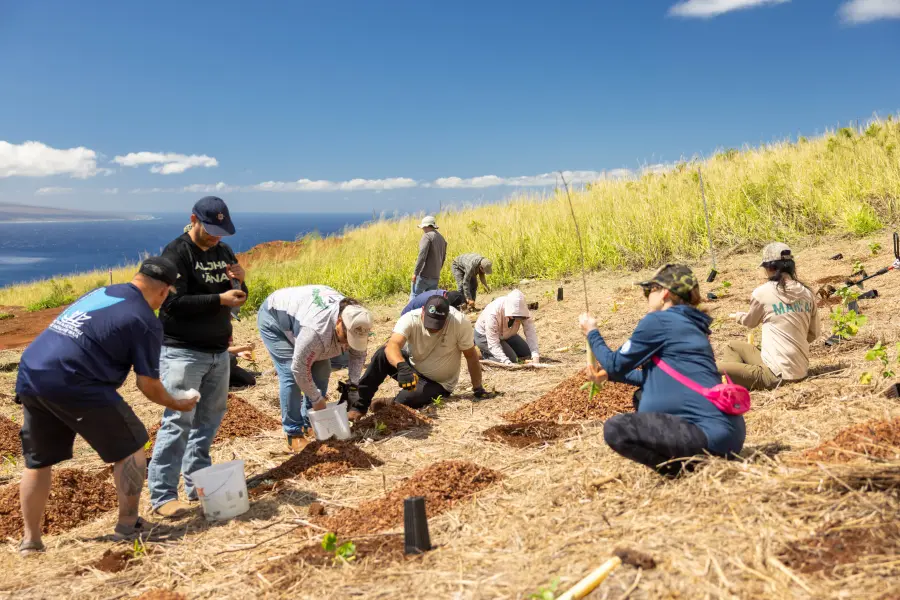
Since few restoration initiatives have worked in landscapes this harsh in Hawaiʻi, the reforestation effort is undergoing what might be considered beta testing in an approximately four-acre section within the 200-acre confines of Puʻuwai. After using various methods to control the invasive grasses, native ʻaʻaliʻi, wiliwili and Polynesian-introduced kukui grown at the Kuʻia Agricultural Education Center were planted in four different sections utilizing four different planting techniques.


“What we're trying to do is find methods that are scalable, feasible and just healthier overall,” said Daniel Kahaialiʻi, a field technician with Kuʻia Agricultural Education Center.


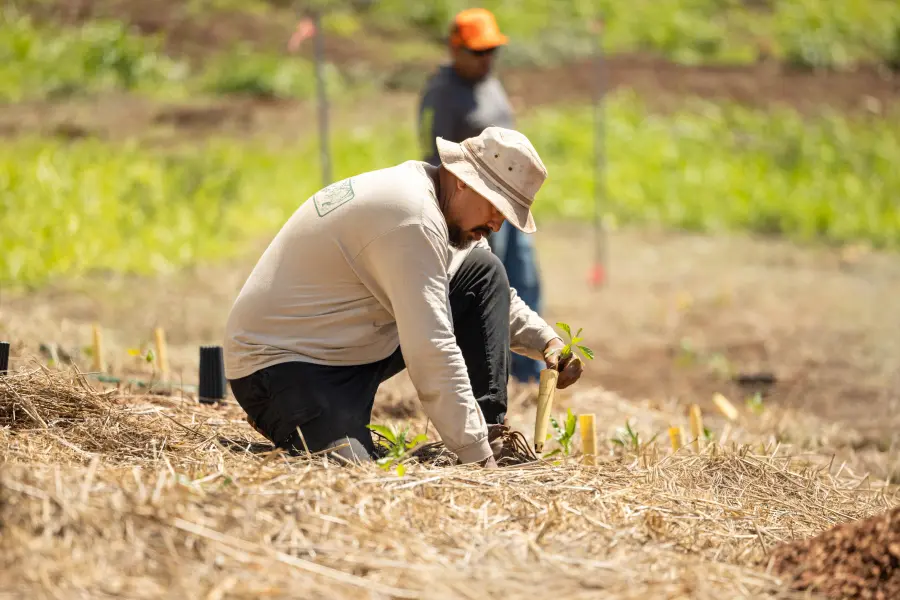
Daniel Kahaialiʻi placing a plant into the ground at Puʻuwai

Daniel Kahaialiʻi with Kuʻia Agricultural Education Center prepares to place a plant into the ground at Puʻuwai.


Much of these plantings happened in late February 2026. That’s when limahana from KS’ ‘Āina Pauahi natural and cultural stewardship team joined members of KAEC in planting seedlings into the ground in a grid-like pattern.


“Working alongside Kamehameha Schools in this effort to reinforce the kuahiwi areas of the ‘āina, I see that their passion for cultivating their ‘āina and their push for more water resiliency,” said Kapu.


ʻĀina Pauahi staff preparing to plant native species at Puʻuwai

Staff from Kamehameha Schools’ ʻĀina Pauahi Natural and Cultural Stewardship Division prepare to plant native species at Puʻuwai at Kuʻia, Lahaina, Maui.


The ultimate vision for KS’ ma uka lands is to see a return to a resilient, native dominated landscape incorporating agroforestry and important food crops. And from that ʻōlelo noʻeau, we know what kind of power that restoration will unlock.


“The dream is that through our work of restoring native species to these lands, we’ll once again have abundant water in these areas. And that as our places thrive, so will our people,” said Browning.


For more information on the vision to bring abundance back to Lahaina ma uka to ma kai, visit: ksbe.edu/lahaina

Eyes on 'aina

Eyes on 'aina: How Kamehameha Schools is supporting a new era of wildfire resilience across Hawai'i

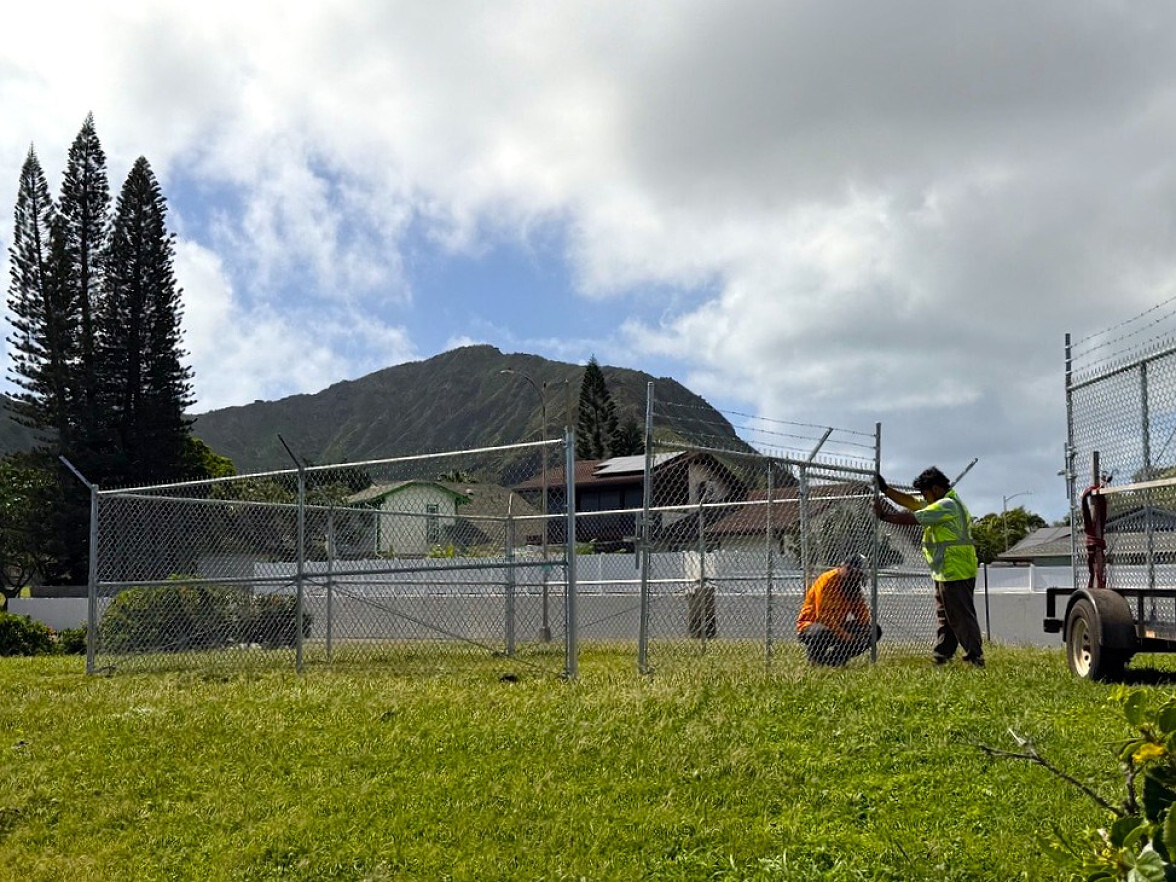
On the lawn near the entrance to the Kalama Village Shopping Center in Maunalua on Kamehameha Schools lands in East Honolulu, workers put the final touches on a 400-square-foot chain-link enclosure that will house a marvel of technology intended to help keep this community safe.


“Technology alone isn’t the solution, but when paired with our shared sense of responsibility, it becomes a powerful force for safeguarding this and other communities,” Kamehameha Schools Director of Land Operations Perry Kealoha said.


Ke Kula ʻo Kamehameha began work in February toward installing a statewide network of ALERTWest artificial intelligence-powered wildfire detection cameras — a project that blends cutting-edge technology with a deep sense of kuleana to place, people and community. Their presence here signals something much larger: a commitment to protecting Hawaiʻi’s future through shared responsibility.


Seven cameras, including the one at Kalama Village, will be delivered in the next month and are expected to be installed and operational by March 31. Stationed across Hawaiʻi on O‘ahu, Maui and Hawai‘i Island, the cameras will use 360-degree views to scan the environment for early hints of heat anomalies and smoke, day and night, sending alerts to county fire departments when danger appears. For emergency responders and land stewards, those minutes matter — the difference between a small brush fire and something far worse.


Most of the KS cameras will be located in remote areas out of the view of communities. The most visible camera will be located at the Kalama Village Shopping Center. That camera will be on a trailer and housed within the chain-link enclosure. Another camera on a trailer will also be located in Maunalua on a Koko Crater ridge overlooking an area near Kamilo Iki Community Park. For privacy, nearby homes that show up on either camera feed will be pixelated and unrecognizable.


The Ke Kula ‘o Kamehameha cameras will complement cameras owned and installed by Hawaiian Electric. But as KS leaders emphasize, this is not simply a technology project. It is part of a broader movement toward community resiliency and the understanding that wildfire prevention and protection is a shared kuleana.


“Wildfires don’t stop at boundary lines,” Kealoha said. “And neither should the work to prevent them. Our goal is not only to protect our own lands, but to be a good neighbor — to strengthen the safety net for entire communities.”


Brush fires in recent years have reshaped the way local organizations think about preparedness.


Many of these places sit at the intersection of natural beauty, cultural heritage, and community livelihood. Protecting them is not discretionary — it is foundational to KS’ values.


For years, KS land stewards have worked alongside county fire departments, state agencies, conservation nonprofits, and neighboring landowners on fuel reduction, firebreaks, forestry restoration, and emergency access planning. A collaboration with Hawaiʻi Wildfire Management Organization is also working to raise awareness and equip community members with tools to protect their homes, ʻohana and neighborhoods. These cameras can also help in areas with steep or rocky topography where mechanical mowing is not possible or too dangerous. The introduction of AI detection technology is simply another step: a layer of foresight designed to complement hands-on stewardship.


Ke Kula ʻo Kamehameha views the camera network as an extension of its longstanding partnerships — a way to strengthen coordination with first responders and increase real-time visibility for everyone working on the front lines of wildfire management.


Though AI-powered cameras might seem futuristic, KS approaches this initiative through an indigenous, ʻāina-based lens: caring for the land ensures the well-being of generations yet to come. To KS, wildfire resilience is not solely about infrastructure or hardware. It is about affirming a covenant with the ʻāina — honoring the reciprocal relationship that has sustained the Native Hawaiian people for centuries.


On the day the first cameras go live, they’ll mark more than an operational milestone. They’ll represent the weaving together of Hawaiian values, modern innovation, and a collective responsibility to protect community.


“Our hope,” Kealoha adds, “is that these cameras become part of a broader movement — one where partners, communities, and agencies work together, side by side, to keep our islands safe. Community resilience for wildfires and other natural disasters is not something any one of us can achieve alone.”

How this North Shore farmer is keeping agriculture alive in Hale'iwa

How this North Shore farmer is keeping agriculture alive in Hale'iwa

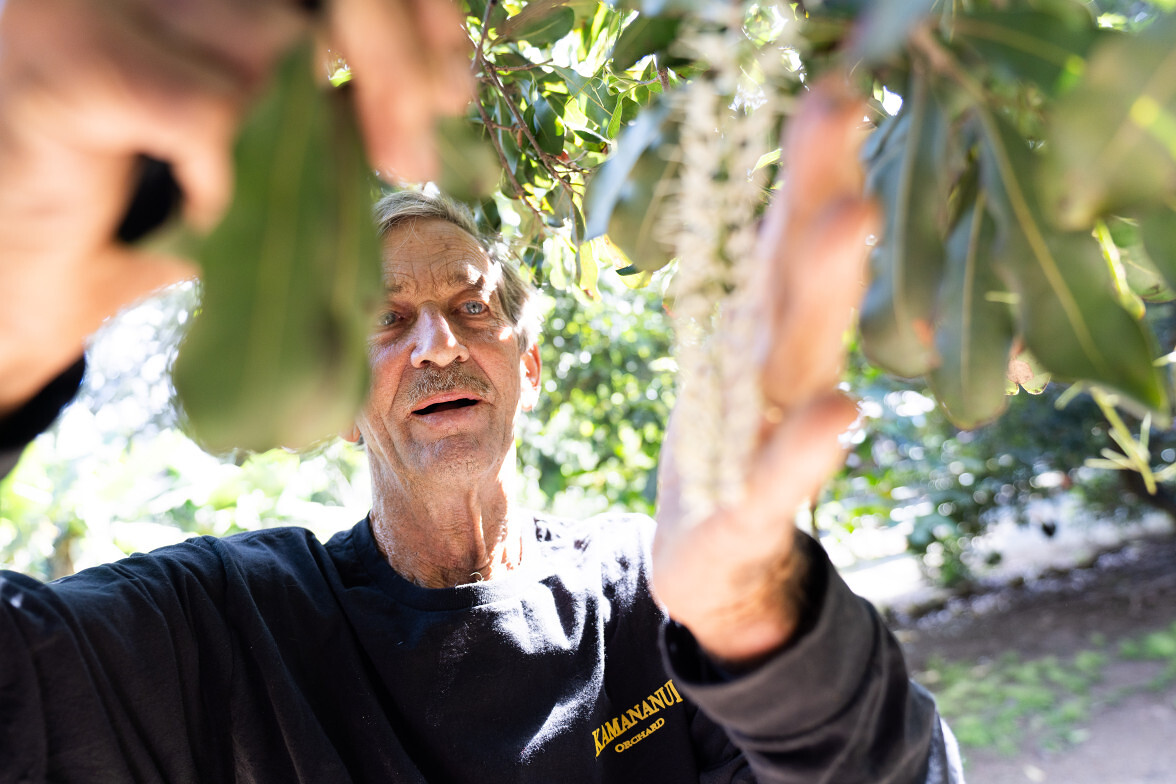
Now known for its shrimp trucks, surfing and must-see tourist stops, Hale'iwa wasn't always the North Shore postcard it is today. For Randy Paty, it was once a place defined by agriculture and the everyday rhythms of a working town.


“Haleʻiwa used to be primarily agriculture and fishing, and the little stores that popped up [were] a result of the sugar company,” Paty said. “So any time we can keep agriculture in the memory and vocabulary of people, it helps.”


The longtime farmer can trace his family’s connection to the North Shore back seven generations, with a legacy of ʻāina stewardship that reaches to the time of the Hawaiian Kingdom. The Kamehameha Schools’ parcel that now hosts his North Shore Macadamia Nut Company was once leased and cared for by his family in the late 1800s — a return Paty describes simply as “full circle.”


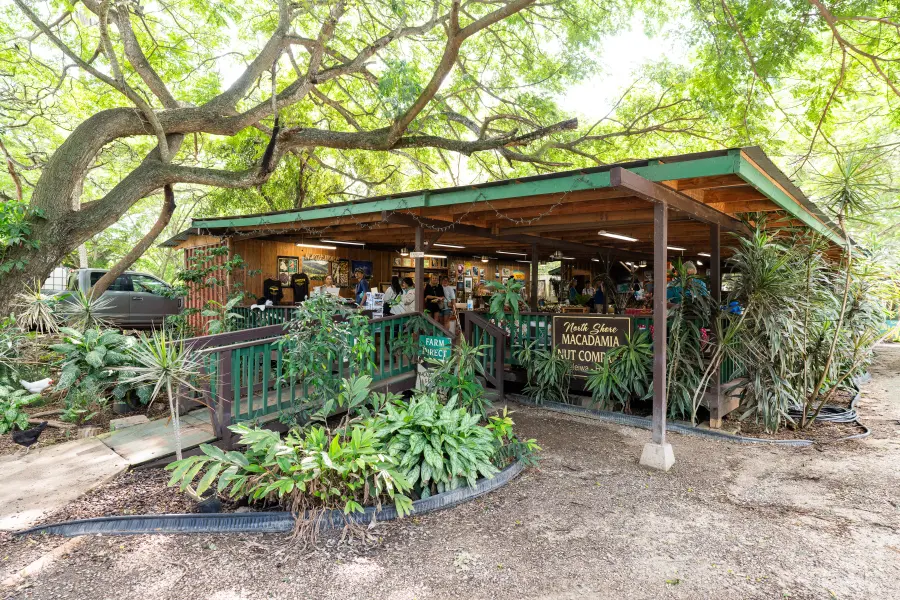
North Shore Macadamia Nut Company in Haleʻiwa

As a kid, his world stretched from Waialua Bay to the backroads of town, where he surfed, rode his bike and watched cows graze where traffic now flows. The ocean and the land filled his days, grounding him early in a sense of place that has endured even as Haleʻiwa has changed.


That connection eventually led Paty to farming. He began growing macadamia nuts in 1971, building a life and livelihood rooted in care, patience and long-term thinking. Farming, he says, was never about getting rich. It was about showing up every day and doing the work.


“My father used to say, ‘If you’re not an optimist, don’t be a farmer,’” Paty said. “It’s more of a lifestyle than a job making a million bucks.”


The land he now tends was once an abandoned cow pasture, fenced off and overgrown. Today, it is the home of his storefront with community pop-up booths and a small sample of his ma uka orchard of macadamia, coffee, fruit and canoe plants. From fresh-roasted macadamia nuts and honey to coffee and shave ice, the stand has grown to be a familiar stop, drawing both locals and first-time visitors.


But progress came slowly, through steady effort and a belief that improvement doesn’t have to be dramatic to be meaningful.


“We’re really guests here,” Paty said. “So little by little, we try to work on it and improve it.”


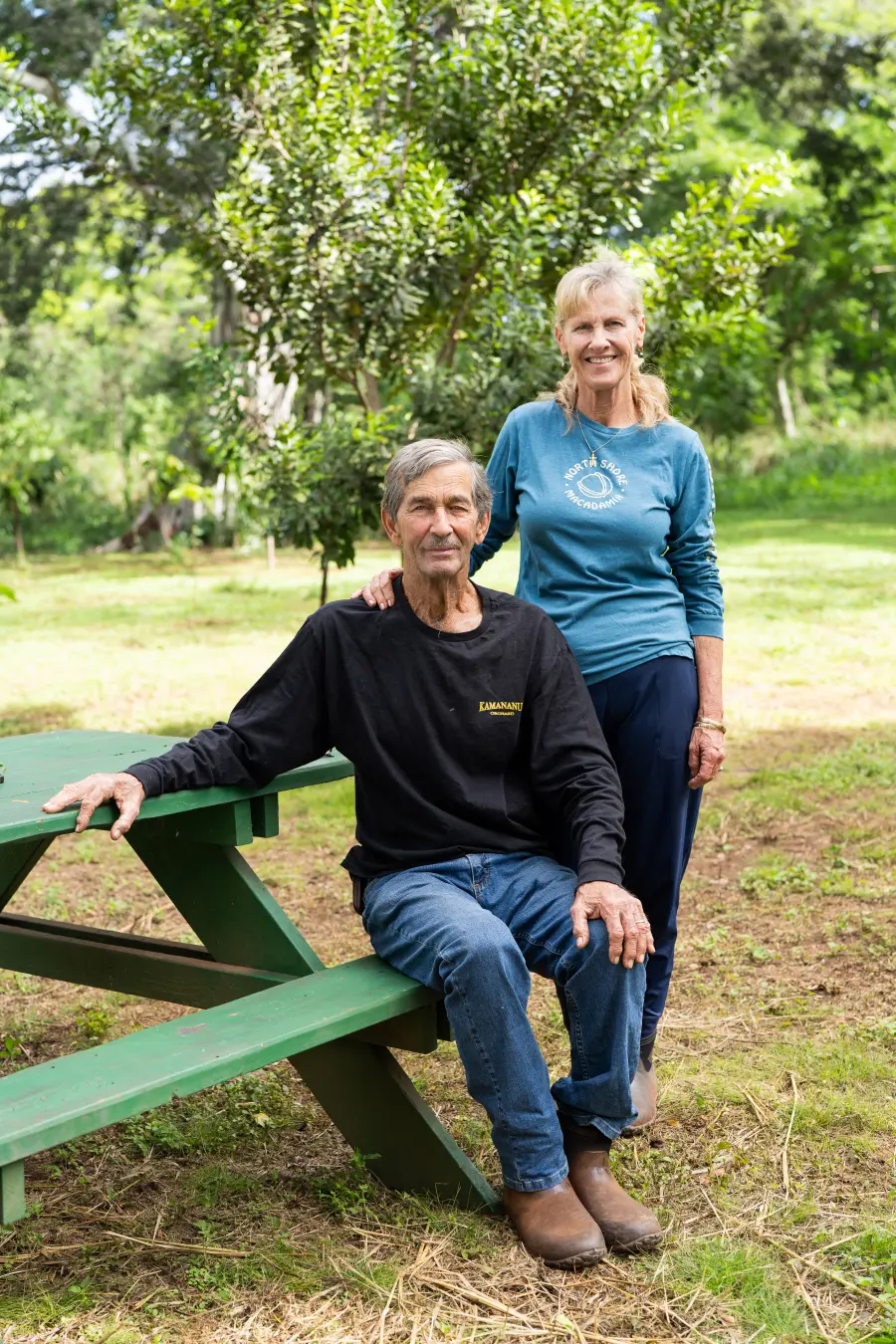
Randy and Mary Paty seated and standing near a green picnic table at the North Shore Macadamia Nut Company in Haleʻiwa
Randy and Mary Paty at the North Shore Macadamia Nut Company in Haleʻiwa

That mindset was passed down through generations. His late father, William “Bill” Paty, who once led the Board of Land and Natural Resources, and his late mother, Peggy Paty, raised their family with a strong sense of responsibility to place. Longtime community advocates, his parents were instrumental in efforts to protect Kaiaka Bay from development in the 1970s.

“There aren’t many more of the original families here,” Paty said. “But it holds a special place in my heart. It’s home.”

Today, Paty sees agriculture as essential to Haleʻiwa’s future, not just its past. With farmers navigating unpredictable conditions and tight margins, Paty says the ability to keep farming often depends on having the right support and long-term partnerships. He credits Kamehameha Schools with creating space for farmers to succeed.

“Kamehameha Schools has been so supportive of farmers,” Paty said. “They give us the leeway to grow and expand. They want to see this work.”

As Haleʻiwa continues to evolve, Paty hopes its identity remains grounded in the values that shaped it: kuleana to place, respect for ʻāina and pride in caring for something that will outlast any one generation.

“The success of Haleʻiwa has to be rooted in the values of farming, fishing and hard work,” Paty said.

E HOLOMUA PŪ KĀKOU!

LET US MOVE FORWARD TOGETHER!


Visit pauahi.org to learn how your donations can help uplift our lāhui

pauahi.org

See our future vision take shape with Strategic Plan 2030

KSSP 2030

Learn more about our kuleana at Kamehameha Schools.

ksbe.edu

DOWNLOADS: